 English
 Pусский




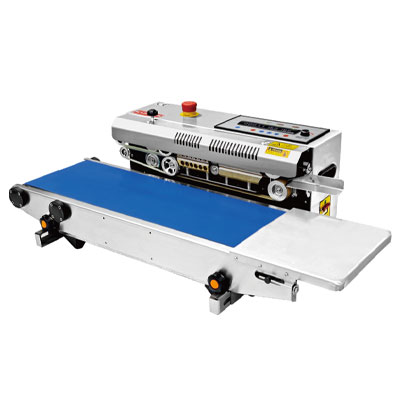
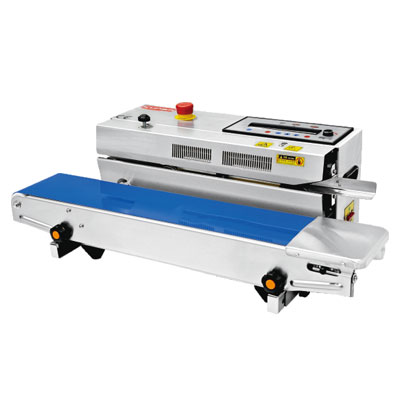
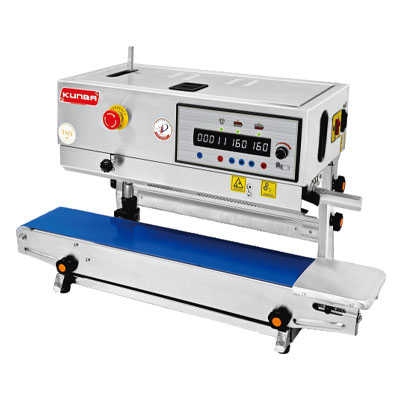
Want to find out how KUNBA packaging machines can benefit you? Contact and consult our team of experts to find out about packaging solutions tailored to your needs!
Vacuum Packing Machine Selection for Fresh Meat & Veg
Apr 21,2026
Walk into any butcher shop or produce packing shed, and you will see the same silent struggle: juice leaking from a meat package that looked fine an hour ago, or limp lettuce inside a bag that never quite sealed right. Fresh products are unforgiving. They contain moisture, enzymes, and living tissues that react poorly to the wrong vacuum environment.
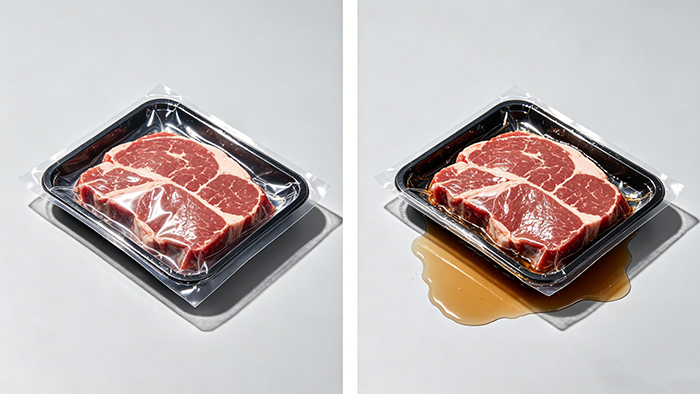
The difference between a successful fresh food pack and a spoiled one often comes down to three factors that most buyers overlook until it is too late: pump speed, seal bar moisture tolerance, and cycle programmability. Let us walk through exactly how to match equipment to the unique demands of fresh meat and vegetables.
Why Fresh Meat Demands Fast Vacuum and Gentle Draw
Fresh meat contains 60–75% water. When a chamber vacuum sealer pulls air out too aggressively, moisture boils at room temperature under low pressure. This phenomenon—called “bubbling” or “flash evaporation”—pulls liquid out of the meat tissue. That liquid pools around the seal area, preventing a clean closure.
Here is what happens on the line: The machine pulls a vacuum, liquid wicks into the seal zone, the sealing bar melts through a wet film, and the result is a channel leak. Within three days of refrigeration, the package deflates, and the purge fluid collects visibly.
The technical fix: Choose equipment with adjustable vacuum speed settings. Slower initial pull (sometimes called “soft vacuum” or “gentle start”) gives moisture time to stay inside the muscle tissue. For red meats, a target ultimate vacuum of 2–3 mbar is ideal—low enough to remove oxygen but not so low that aggressive boiling occurs.
According to packaging engineers at a major meat processing facility in Iowa, switching to a machine with programmable vacuum ramp rates reduced their purge loss from 7% to under 1.5%. That translates directly to more sellable weight per carcass.
Vegetables: The Opposite Problem with Higher Stakes
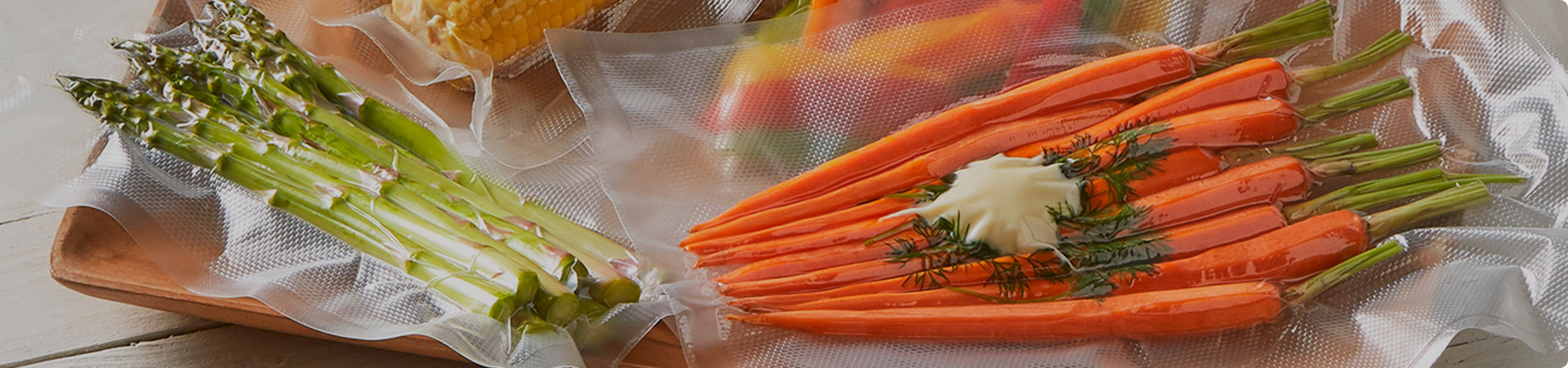
If meat suffers from too much vacuum aggression, vegetables suffer from too little attention to gas composition. Leafy greens, broccoli, and bell peppers continue to respire after harvest—consuming oxygen and releasing carbon dioxide. A standard vacuum cycle removes most air, but without controlling the residual gas mixture, two problems appear:
-
Oxygen levels above 1% allow continued respiration, leading to yellowing and decay within 5–7 days.
-
Complete oxygen removal below 0.1% triggers anaerobic respiration, producing off-odors and soft rot.
The sweet spot for most fresh vegetables is 0.5–2% residual oxygen, achieved by partial vacuum or vacuum with gas flush. For equipment selection, this means you need a unit capable of controlled vacuum release or gas backfill (nitrogen or CO₂).
Additionally, vegetable packages are prone to “puncture points” from stems, seeds, or sharp edges. The sealing system must compensate with slightly higher seal pressure and wider sealing bands (8–10mm minimum) to flow around these irregularities.
One Machine, Two Worlds: Can It Handle Both?
Many packers assume any chamber sealer works for both meat and vegetables. In reality, a production environment rotating between beef primals and lettuce cartons requires specific design features:
| Feature | Meat Requirement | Vegetable Requirement | Why It Matters |
|---|---|---|---|
| Vacuum pump | 40–100 m³/h, oil-lubricated | 20–40 m³/h, or variable speed | Meat needs fast cycle times; vegetables need a gentle pull |
| Seal bar width | 6–8mm, Teflon-coated | 8–12mm, serrated or flat | Vegetables need a wider seal to bridge stem punctures |
| Programmability | 2–3 stages (slow start, full vacuum, seal) | 3–5 stages (vacuum, gas flush, secondary vacuum, seal) | Gas flush extends veg shelf life significantly |
| Chamber material | Stainless steel only | Stainless steel or coated aluminum | Meat acids corrode non-stainless surfaces |
| Gasket material | Silicone (all temps) | Food-grade silicone (FDA compliant) | Vegetables often packed with organic acids (citric, ascorbic) |
A produce packer in California shared their experience: “We tried using our meat sealer for organic lettuce kits. The seals failed constantly because the bar wasn’t wide enough. We lost 400 units before we figured it out. Now we use a unit with a 10mm bar and nitrogen flush capability, and shelf life went from 5 days to 12 days.”
Practical Cycle Setting for Fresh Products
If you already own a chamber sealer with programmable cycles, here are baseline settings to test. If you are shopping for new equipment, these parameters will help you ask the right questions during demos.
For fresh beef, pork, or lamb (whole cuts):
-
Vacuum level: 2–3 mbar
-
Vacuum speed: slow (ramp over 15–20 seconds)
-
Standby time (gas release): 2–3 seconds
-
Seal time: 1.5–2.0 seconds (depending on bag thickness)
-
Cool time: 3–5 seconds
For chicken or turkey (portioned):
-
Vacuum level: 3–5 mbar (slightly higher to avoid purge)
-
Vacuum speed: medium
-
Seal time: 1.8–2.2 seconds (poultry bags have higher slip additives)
-
Double seal recommended: yes
For leafy vegetables (spinach, kale, lettuce):
-
Vacuum level: 10–15 mbar (partial vacuum only)
-
Gas flush: 80% N₂ / 20% CO₂ (if available)
-
Seal time: 1.2–1.5 seconds (shorter to avoid melt-through)
-
Seal bar width requirement: 10mm minimum
For firm vegetables (bell peppers, broccoli, green beans):
-
Vacuum level: 5–8 mbar
-
Gas flush: optional but beneficial for long shelf life
-
Seal time: 1.5–1.8 seconds
-
Use a serrated seal bar to create micro-perforations only if the packaging permits.
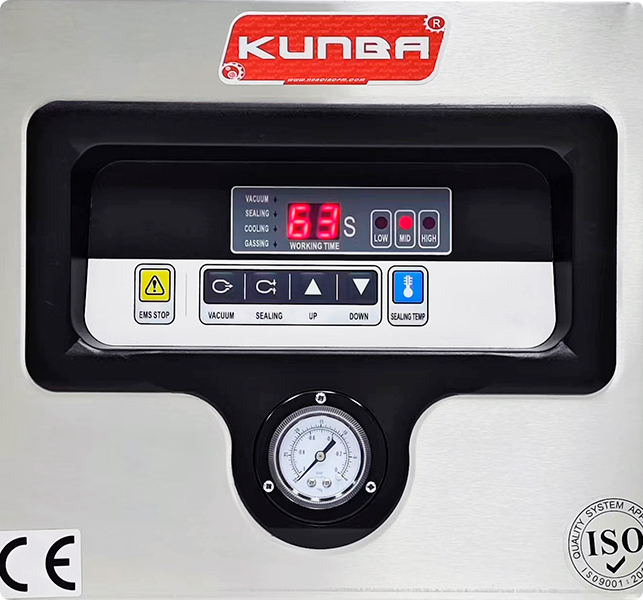
If these parameters look unfamiliar, review a detailed cycle programming guide for perishable foods that walks through each setting with real product examples.
Common Fresh-Pack Failures (And How to Prevent Them)
Failure #1: “My meat packages look great initially, but after a week, there is air inside.”
Root cause: Microscopic channel leaks from moisture contamination during sealing.
Prevention: Add a “dry seal” step—run an empty seal cycle to heat and dry the bar before loading meat. Also, use bags with a textured inner surface to channel moisture away from the seal zone.
Failure #2: “Broccoli stems puncture the bag during vacuum.”
Root cause: Sharp points combined with high vacuum pressure.
Prevention: Use thicker bags (90–120 micron), and reduce the vacuum level to 8–10 mbar. Alternatively, add a cardboard or plastic sleeve inside the bag around the stem ends.
Failure #3: “My sealed vegetable bags look tight, but smell fermented after 10 days.”
Root cause: Anaerobic bacteria growth due to zero oxygen.
Prevention: Do not pull a full vacuum on most vegetables. Use partial vacuum or gas flush to leave 1–2% residual oxygen. This slows respiration without triggering anaerobic spoilage.
Failure #4: “Seals look perfect but fail during frozen storage.”
Root cause: Condensation between bag layers during freezing expands and weakens the seal.
Prevention: Ensure the seal area is completely dry before freezing. A double seal with a 2mm gap between lines creates a redundant barrier. For meat going to frozen storage, add a 5-second cooling time after sealing before exposing to cold air.
Material Compatibility: Bags, Films, and Oxygen Transmission Rates
Even the best sealer cannot compensate for the wrong bag. Fresh meat and vegetables have different oxygen requirements:
-
Red meat benefits from high oxygen transmission rate (OTR) bags (30–50 cc/m²/day) to maintain bloom color, but only if sold fresh within 5–7 days. For longer storage, use low OTR (5–10 cc/m²/day) with vacuum.
-
Poultry and fish require low OTR (<5 cc/m²/day) to prevent oxidation and off-flavors.
-
Vegetables vary widely: leafy greens need moderate OTR (15–25 cc/m²/day) to avoid anaerobic conditions; root vegetables can use low OTR.
Always request OTR test data from your bag supplier. ASTM D3985 is the standard method for oxygen transmission rate measurement.
Making the Final Selection: Questions to Ask Before Buying
When evaluating equipment for fresh meat and vegetable applications, bring these questions to your supplier demonstration:
-
“Can the vacuum speed be adjusted independently from the final vacuum level?”
(Yes means you can control moisture boiling. No means limited meat capability.) -
“Does the machine support gas flush or controlled atmosphere backfill?”
(Essential for vegetables; optional but valuable for extended meat shelf life.) -
“What is the widest seal bar available for this model?”
(10mm+ is preferred for vegetables with stems or irregular shapes.) -
“Are seal bar temperature and time digitally controlled with closed-loop feedback?”
(Analog timers drift with ambient temperature—avoid them for fresh products.) -
“Can you provide documented cycle settings from another fresh meat or vegetable packer?”
(Real-world validation matters more than spec sheets.)
For packers who handle both categories daily, a single machine with programmable memory (at least 10 preset cycles) and gas flush capability is the most cost-effective path. Explore how a dual-purpose sealing platform handles meat and vegetable parameters without constant recalibration.
The Fresh-Pack Bottom Line
Fresh meat and vegetables are alive. They breathe, weep, and react to their environment. A vacuum packing machine designed for dry goods or frozen blocks will disappoint when pointed at a wet pork shoulder or a case of organic kale.
The right equipment respects the product’s biology: slow vacuum for meat, partial pressure or gas flush for vegetables, wide seals for stems and leaves, and programmable cycles that switch between worlds without guesswork. Downtime and spoilage are expensive teachers—but they only have to teach once.
What fresh product has given your current packaging line the most trouble? The answer points directly to the feature you need most in your next sealer.
References & Technical Notes
-
Residual oxygen and shelf life data adapted from USDA Agricultural Research Service guidelines on modified atmosphere packaging (MAP)
-
ASTM D3985 – Standard Test Method for Oxygen Gas Transmission Rate Through Plastic Film
-
Meat purge loss reduction figures based on published case studies from meat science journals (2020–2024)
-
Vegetable anaerobic thresholds referenced from UC Davis Postharvest Technology Center publications
Latest events