 English
 Pусский


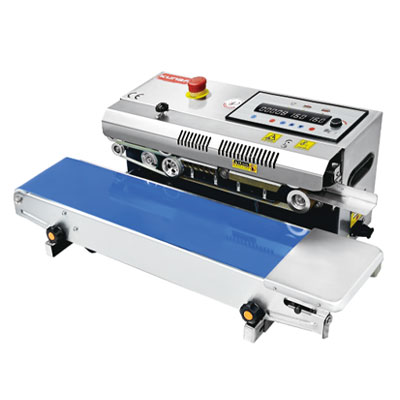


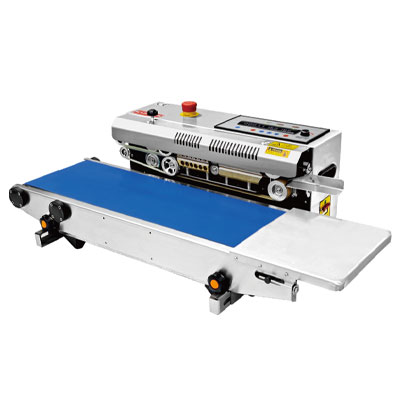
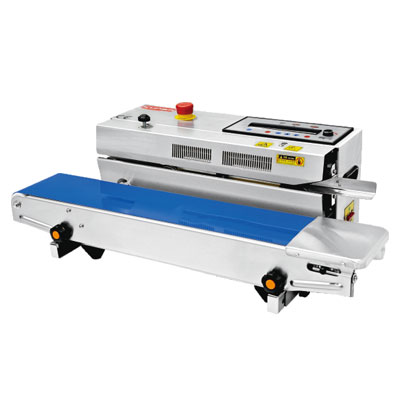
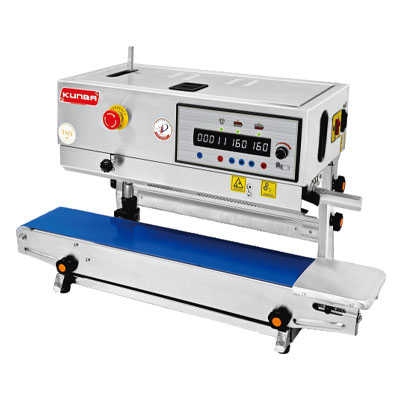
Want to find out how KUNBA packaging machines can benefit you? Contact and consult our team of experts to find out about packaging solutions tailored to your needs!
Double Output: Upgrading to a Fully Automatic Vacuum Packing Machine | KUNBA
Jun 02,2026
Your production line is running. Operators are loading bags into the chamber, pressing the lid, waiting for the cycle to complete, then unloading and repeating. It works—but you can’t help noticing the bottleneck. Every time an operator’s hands are occupied with one chamber, the other sits idle. By the end of a shift, you look at the total output and wonder: is this really the ceiling?
For many packaging operations, the gap between current output and potential output is simply the gap between a semi-automatic and a fully automatic vacuum packing machine. The difference isn’t just about speed—it’s about whether your equipment works with your operators or for your operators.
This guide examines what “double output” actually means in practical terms: the production metrics, the labor economics, and the operational shifts that come with upgrading to full automation. Whether you’re running a food processing facility, a pharmaceutical packaging line, or an industrial manufacturing operation, the decision to automate follows a predictable set of trade-offs.
What “Fully Automatic” Actually Means
Before comparing outputs, it helps to clarify what automation level really means in vacuum packaging.
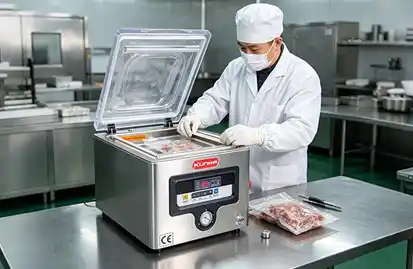
A semi-automatic vacuum packing machine—whether single-chamber or conventional double-chamber—requires manual intervention at key points. Operators must load bags into the chamber, manually close the lid, and wait for the cycle to complete before unloading. The machine handles the vacuum and sealing automatically, but the rhythm of production is set by human hands.
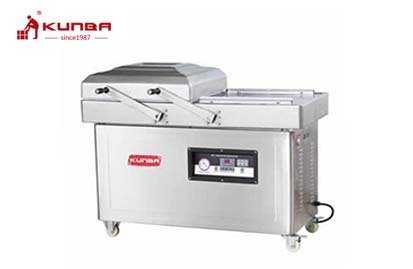
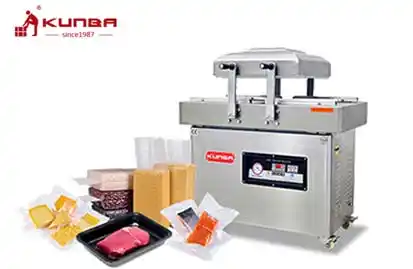
A fully automatic vacuum packing machine, by contrast, eliminates manual lid operation entirely. In a typical fully automatic double-chamber design, the lid swings and closes automatically. In more advanced configurations—such as continuous thermoformers or conveyor-belt systems—the entire process from product loading to sealed package exit runs with minimal human intervention.
(https://youtu.be/VFIgenEbZA0?si=duTbX8nZ5Rh-Tn4P)
The practical difference is straightforward: semi-automatic machines wait for operators; fully automatic machines keep running.
This distinction has a direct impact on output. Industry data shows that fully automatic thermoforming vacuum packaging machines can achieve hourly outputs of 1,200 to 2,000 bags, compared to 300 to 500 bags for semi-automatic units—a capacity gap of four times or more. Even in double-chamber configurations, the elimination of manual lid cycling translates to significant throughput gains.
For a deeper look at the specific machine configurations available across different automation levels, explore KUNBA’s range of vacuum packaging solutions.
Output Comparison: Semi-Automatic vs. Fully Automatic
The output difference between semi-automatic and fully automatic machines isn’t just about peak speed—it’s about sustained throughput across a full shift.
| Factor | Semi-Automatic | Fully Automatic |
|---|---|---|
| Lid operation | Manual—operator must open and close each cycle | Automatic—lid swings and seals without intervention |
| Cycles per minute | Limited by operator speed and fatigue | Driven by machine cycle time, consistent throughout shift |
| Operator requirement | One operator per chamber, actively engaged | One operator can oversee multiple machines |
| Shift consistency | Output declines as operator fatigue sets in | Output remains consistent from first hour to last |
| Changeover time | Faster for frequent product/size changes | May require reprogramming but can be presets |
| Best-fit production volume | Small to medium batches, frequent changeovers | High-volume, continuous production |
The key takeaway: a fully automatic machine doesn’t just run faster—it runs more consistently. An operator who manually cycles a lid 500 times in a shift will slow down. A machine won’t.
However, automation isn’t always the right answer. For operations with daily production consistently below 500 bags, the ROI timeline for full automation extends beyond two years. And if you frequently swap between drastically different pouch sizes or tray types multiple times per hour, the instant feedback of a manual lid can actually be faster than reprogramming pneumatic timings.
Beyond Speed: The Productivity Multipliers
Doubling output is often the headline benefit, but upgrading to a fully automatic vacuum packing machine unlocks several secondary productivity gains that compound the return.
Labor reallocation. A fully automatic machine doesn’t necessarily eliminate jobs—it redeploys labor to higher-value activities. Instead of spending shifts cycling lids, operators can oversee quality checks, manage material flow, or tend to upstream and downstream processes. Facilities transitioning from manual or semi-automated processes to fully automatic packaging can achieve a 40% reduction in direct labor costs.
Reduced physical strain. Repetitive lid operation is physically demanding. Automatic lid systems eliminate this repetitive motion, reducing operator fatigue and the associated risk of strain injuries.
Minimized contamination risk. Every time an operator touches a bag or interacts with the chamber, there’s a potential contamination vector. Fully automatic systems reduce human contact with the product, which is particularly critical in food and pharmaceutical applications.
Material efficiency. Advanced fully automatic systems can adjust film usage based on product detection, leading to lower material consumption and less residual waste. Some systems also reduce bag-making steps by up to 50% compared to manual processes.
Consistent seal quality. Manual operation introduces variability—one operator may press the lid differently, or bags may be positioned inconsistently. Automation ensures repeatable positioning and sealing parameters cycle after cycle.
The Decision Framework: Is Automation Right for You?
Upgrading to a fully automatic vacuum packing machine is a capital decision. Here’s a practical framework to evaluate whether it makes sense for your operation.
Calculate your current labor cost for packaging
Start with a simple calculation: how many operator hours go into vacuum packaging each day? Multiply by your labor rate. If annual labor cost exceeds 60% of the equipment investment for a fully automatic machine, automation typically pays back within three years.
Measure your daily output volume
Count your average daily packages. If you’re consistently above 500–1,000 bags per day, automation starts to become economically attractive. Below that threshold, the payback period lengthens significantly.
Assess your product mix
Do you run the same bag sizes and product types for hours at a time? Or do you change over every 15 minutes? Fully automatic machines excel at sustained runs of similar products. Frequent, unpredictable changeovers may favor semi-automatic flexibility.
Factor in the “hidden” benefits
Labor savings are the most visible benefit, but don’t overlook reduced product waste, lower material consumption, improved food safety, and the ability to run longer shifts without operator fatigue.
Calculate your payback period
With a 40% reduction in labor costs and significant decreases in material waste, most facilities see a full payback within 12 to 18 months. For high-volume operations processing over 5,000 units daily, fully automated systems can reach break-even 14 months faster than manual systems.
For operations with production volumes and product types that align with automation, exploring the specific configurations of single-chamber and double-chamber systems is the natural next step in the selection process.
Real-World Application Scenarios

High-volume food processing
A meat processing facility runs two shifts, packaging 3,000 units of portioned meat daily. Currently using two semi-automatic double-chamber machines with four operators rotating across shifts. Labor costs are significant, and the operation struggles with consistency during peak hours.
Upgrading to fully automatic double-chamber machines would allow the same output with two operators (a 50% labor reduction), eliminate the afternoon slowdown as operators fatigue, and reduce product handling for improved food safety. With a payback period estimated at 14–16 months, the investment makes clear financial sense.
Small-batch specialty production
A craft food producer packages 200–300 units per day across 15 different product sizes and bag types. Changeovers happen multiple times per shift. The flexibility of semi-automatic operation—where operators can instantly adjust positioning and respond to different bag sizes—actually outperforms automation in this context. The higher capital cost of a fully automatic machine would take over three years to recoup.
These scenarios illustrate that the “right” answer depends entirely on your specific production profile. For tailored guidance on matching equipment to your application, KUNBA’s industry solution resources can help you evaluate which configuration aligns with your operational requirements.
Next Steps: From Decision to Selection
Upgrading to a fully automatic vacuum packing machine is ultimately about aligning your equipment with your production reality. If your volume is high, your product mix is relatively stable, and labor costs are a significant factor, automation offers a compelling path to double—or more than double—your output while reducing per-unit costs.
If your volume is lower or your mix is highly variable, the flexibility of semi-automatic operation may be the more economical choice—at least for now.
Once you’ve clarified these key decision factors—daily volume, product mix, labor costs, and growth trajectory—comparing the specific specifications of available options becomes the next logical step. You can review KUNBA’s single-chamber and double-chamber vacuum sealers for different production scales, or explore the comprehensive product lineup to find a model that matches your operational needs.
For ongoing education, consider reading KUNBA’s guide on how to set up a double chamber vacuum packing machine, which includes operational best practices, or explore the ROI analysis of upgrading to a dual-chamber system for growing operations.
Related Reading
-
How to Set Up a Double Chamber Vacuum Packing Machine
-
ROI Analysis: Upgrading to a Dual-Chamber Vacuum Sealer
-
Automatic vs. Manual Vacuum Packing Machine: Selection Guide
-
How Often to Clean a Chamber Vacuum Sealer (Maintenance Schedule)
-
Vacuum Packing Machine Selection Guide for Food Processing
This article is part of KUNBA’s technical content library. No direct sales or pricing information is included. All technical discussions aim to help you make informed purchasing decisions.
Latest events