 English
 Pусский




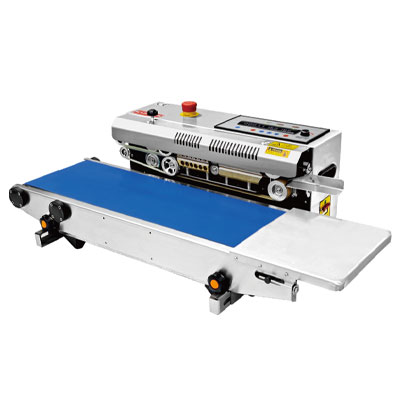
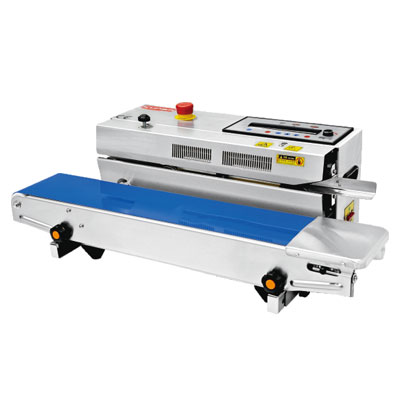
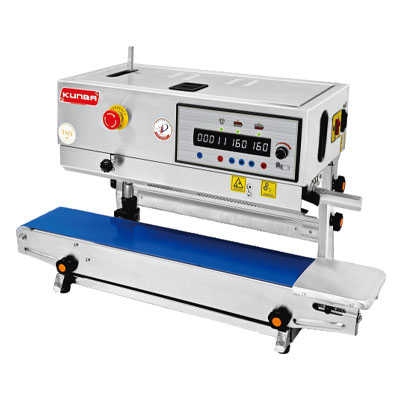
Want to find out how KUNBA packaging machines can benefit you? Contact and consult our team of experts to find out about packaging solutions tailored to your needs!
What’s Next for Vacuum Packing Machine Selection
Apr 28,2026
You‘re staring down a row of gleaming stainless steel units on your supplier’s product page, and your head starts spinning. Vacuum packing machine, price tags, horsepower ratings, country of origin—it all blurs together. The question isn‘t which one looks prettiest. It’s which one won‘t die on you after six months, choke on your marinaded chicken thighs, or force you to buy ridiculously overpriced bags until the end of time. Before you click anything, understand this: over 42% of commercial food businesses wrestle with steep maintenance costs for the wrong choice, while 38% actively hunt for energy-friendlier alternatives that won’t bleed their utility budget dry. The smart ones started asking different questions.
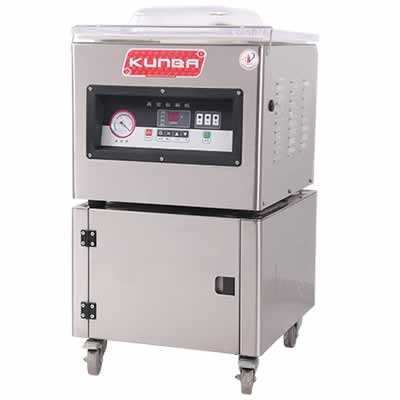
Your Product‘s Personality Matters More Than the Price Tag
Picking a sealer based on price alone is like dating someone just for their car. You’ll regret it fast. The single biggest mistake I see first-time buyers make is ignoring what actually goes into the bag. Are we talking about dry rub-coated brisket? Liquid-rich stews destined for sous-vide? Crunchy snack bars that shatter under too much suction? Each demands a radically different approach.
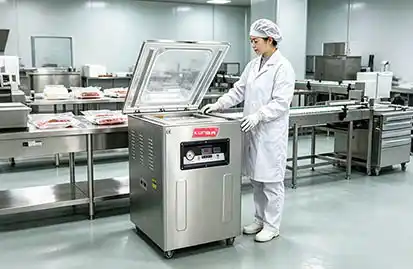
Liquid-heavy or marinated products are the deal-breakers. An external nozzle sealer will gleefully slurp up your teriyaki sauce directly into its pump chamber, leading to a slow, gurgling death and a repair bill you won‘t forget. This is where chamber systems become non-negotiable. By evacuating the entire interior space, chamber sealers keep the internal and external pressures balanced. The bag’s contents stay put. Your marinade stays in the pouch. Your sanity remains intact.
Another hidden hazard is the crush factor. Have you ever watched a vacuum cycle turn a tray of fresh strawberries or artisan crackers into a pulpy brick? Most basic machines don‘t care. They just suck until the preset timer stops. That’s why you need to look for units offering pulse control—the ability to extract air in short, gentle bursts, leaving your delicate products looking store-shelf ready instead of post-apocalyptic.
Capacity, Cycle Rates, and the “Cool-Down” Trap You Didn’t See Coming
Here‘s a scenario that plays out in butcher shops and meal-prep kitchens every week: You buy a machine rated for “heavy use,” then you try to seal forty packs of ground beef back-to-back. By bag twenty, the thermal cut-off trips. Now you’re standing around for forty seconds between seals, your ice cream is melting, and your staff is losing their minds. Entry-level units often demand a 40-second cool-down after each seal. Professional-grade designs pack active cooling systems and heavy-duty transformers to run continuously without melting their own Teflon tape or tripping emergency shutoffs.
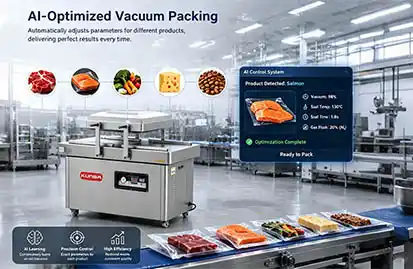
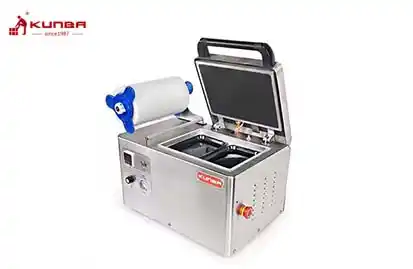
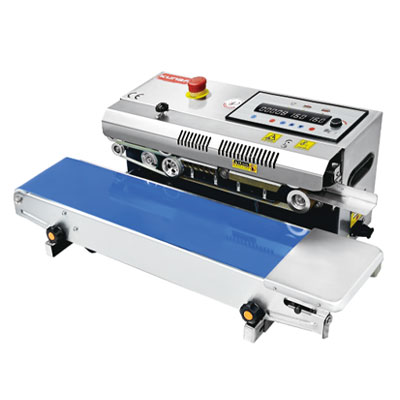
Throughput math is brutally simple. A single-chamber unit might run a 20-to-30-second cycle. A double-chamber configuration lets your team fill one side while the other vacuum-seals, effectively tripling or quadrupling your packaging speed. For high-volume frozen food lines or seafood processing, savvy operators leap straight to automatic belt-fed conveyor systems or even thermoforming platforms that integrate film forming, filling, and sealing in one continuous motion.
And let‘s talk about workspace. Nothing telegraphs “rookie procurement” like buying a machine that physically won‘t fit through your kitchen’s back door. Map out your available benchtop space and footprint before you even browse catalogs. Oil-pump models generally deliver more durable vacuum performance but often demand permanent counter real estate; dry-pump units are lighter and more storable but can sound like a shop vac screaming in the corner.
The Pump—Why You Should Never Skimp on the Engine
The vacuum pump is the heart of your packaging operation. Choosing a cheap one is like putting bargain-bin tires on a race car. Oil-lubricated rotary vane pumps typically produce stronger, deeper vacuum levels (down to 0.8–1.0 mbar range) and withstand far more cycles per day than their oil-less (dry) counterparts . But oil pumps require scheduled maintenance: checking oil levels, changing filters, the occasional seal replacement. An oil-free or dry pump skips the oil mess but generally offers lower peak performance and a shorter operational lifespan, especially if you’re processing hundreds of bags daily.
Where do you find the sweet spot? Look for brands that source German or Italian pump cores (like Busch or DVP). They cost more upfront but translate directly to fewer catastrophic failures and dramatically lower total cost of ownership over five years. Many smart buyers request documented testing results for seal integrity and vacuum consistency from any potential supplier as a standard screening step.
Bag Economics: The Unsexy Cost That Kills Your ROI
New buyers obsess over the one-time machine purchase. Seasoned operators obsess over the consumables. Here’s the dirty little secret the glossy brochures won‘t tell you: chamber machines use smooth, non-embossed bags, which are dramatically cheaper to buy in bulk. External suction sealers require embossed or “channel” bags with textured surfaces that act as air pathways during extraction. Those textured bags cost substantially more per unit.
Multiply that bag cost difference by the 10,000 or 50,000 packs you’ll seal next year. Suddenly that premium chamber machine‘s higher price tag pays for itself in eighteen months just on bag savings. Single versus double seal bar durability matters too. A single heating element might leave microscopic gaps. A double seal bar creates a redundant barrier, practically eliminating freezer burn risk or mid-sous-vide leaks that ruin a whole batch of proteins.
Real-World Chaos: What Nobody Tells You About Wet & Oily Products
This is the part of the selection guide that most online reviews skip. If your product line includes anything oily, brined, or sauce-heavy, you need to scrutinize gasket materials. Cheaper units use standard black rubber or foam gaskets that hold onto bacteria and degrade fast when exposed to salt, acid, or animal fats. Professional-grade silicone gaskets resist corrosion, clean easier, and seal tighter over thousands of cycles.
What about sharp-edge risks? If you’re packing items like crab legs or bone-in pork chops, you need reinforced seal bars and puncture-resistant bag compatibility. Some industrial-grade models offer explosion-proof sealing specifically engineered for these tricky edge cases. And for any facility dealing with granular powders like spices or protein powders, look for anti-dust extraction filters that keep fine particles from destroying your pump internals.
From “Maybe It Fits” to “Designed Around My Workflow”
Generic machines try to serve everyone. Custom solutions serve you. The difference is night and day when you’re running a 16-hour production shift. Maybe you need a deep-chamber system that accommodates bulky pork shoulders or tall glass jars. Perhaps you need a gas-flush option for Modified Atmosphere Packaging (MAP), which replaces extracted oxygen with an inert gas like nitrogen—a huge help if you’re packaging coffee beans, nuts, or oxygen-sensitive pharmaceuticals.
I‘ve watched businesses double their packing accuracy just by switching to digital control panels with voltage stabilization and preset program memory for different product runs. Others have saved on labor by integrating their vacuum unit with an existing conveyor line and automated bag-feed mechanisms. The best suppliers don’t just ship you a box. They ask about your current bottlenecks, your future scaling plans, your sanitation protocols. And then they propose something purpose-built for your reality.
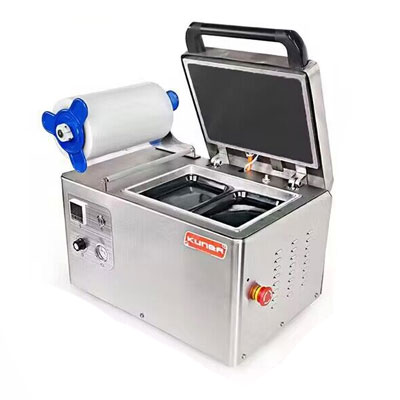
When you‘re ready to move past generic solutions and want to check out a system that actually fits your workflow instead of forcing you to adapt to it, the brand Kunba offers a commercial-grade vacuum packaging range that specialists have configured for everything from small cafe sous-vide all the way to full-scale meat processing.
Verify, Test, Then Commit—The Smart Buyer’s Final Checklist
Before you wire any money or sign any invoice, run through this pre-shipment checklist like your production schedule depends on it, because it does.
-
Request high-definition video demonstrations showing full operation cycles—bag loading, vacuum pull, sealing cycle, ejection. Watch for erratic timing or seal misalignment.
-
Order product samples and test them with your actual items (not their test pork chops).
-
Audit certification documents. Does the supplier provide CE certification? For food-contact surfaces, look for FDA 21 CFR compliance.
-
Ask about on-time delivery rates—top performers hit ≥95%. Confirm spare parts availability and response time metrics (under six hours for service inquiries is a strong signal).
-
Calculate long-term TCO, including energy consumption (high-efficiency pumps lower utility costs), maintenance intervals (user-replaceable heating strips vs. factory-only service), and material waste rates from inaccurate sealing cycles.
Fundamentally, the choice isn‘t about finding the “best” machine by some abstract industry rating. It’s about finding the machine that won‘t make you curse every Tuesday afternoon during the lunch rush. Do your forensic homework first. Match the architecture to your product personality. And never ignore the total ownership math—including consumables, downtime risk, and pump quality—hiding behind that shiny initial price tag. That’s how real packaging professionals win in 2026.
Latest events