 English
 Pусский




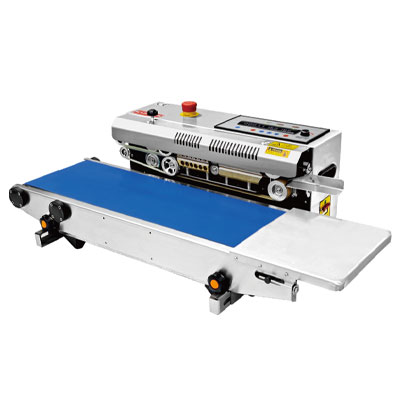
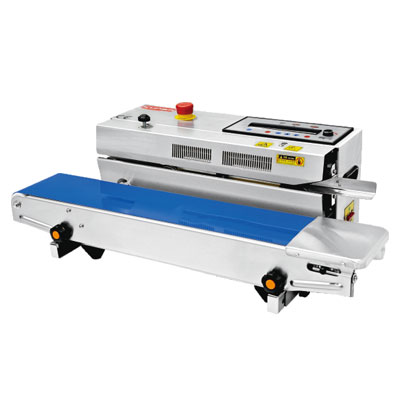
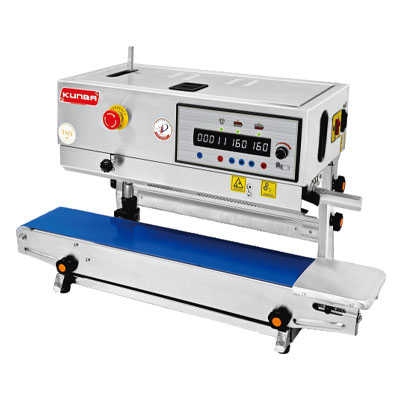

Want to find out how KUNBA packaging machines can benefit you? Contact and consult our team of experts to find out about packaging solutions tailored to your needs!
Next-Gen Vacuum Packing Machines with AI Cycle Optimization | KUNBA
Jul 22,2026
Your vacuum packing machine runs the same cycle every time—same vacuum time, same sealing duration, same cooling period—regardless of whether the bag is full or half-empty, whether the product is wet or dry, whether the ambient temperature is 20°C or 35°C.
That one-size-fits-all approach has been the industry standard for decades. But it’s also inherently inefficient. Every cycle is a compromise: long enough to handle the worst-case scenario, but longer than necessary for most actual runs.
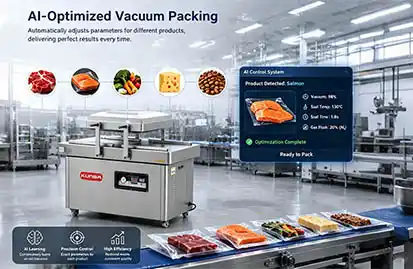
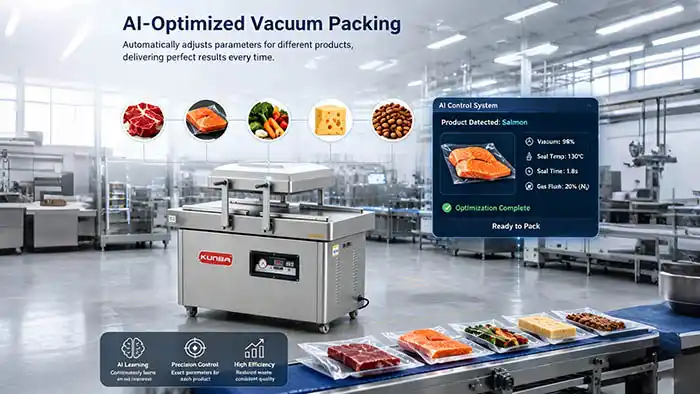
Next-generation vacuum packing machines are changing this with AI cycle optimization—using machine learning, real-time sensors, and predictive algorithms to dynamically adjust every phase of the packaging cycle. The result is not just faster throughput, but better seal quality, lower energy consumption, and fewer unplanned stoppages.

This guide explains what AI cycle optimization actually means in practice, how it works, and what it delivers for real-world packaging operations.
What Is AI Cycle Optimization in Vacuum Packaging?
AI cycle optimization refers to the use of artificial intelligence and machine learning algorithms to continuously monitor, analyze, and adjust vacuum packaging cycles in real time. Unlike traditional machines that follow fixed parameters, AI-optimized machines adapt to changing conditions with each cycle.
The core components:
-
Real-time sensors: Pressure sensors, temperature sensors, humidity sensors, and position sensors feed continuous data to the machine’s control system.
-
Machine learning algorithms: The system learns from historical cycle data—identifying patterns that correlate with successful seals, optimal vacuum levels, and minimal energy use.
-
Dynamic parameter adjustment: Based on real-time conditions and learned patterns, the system adjusts vacuum time, sealing temperature, sealing duration, and cooling time for each individual cycle.
-
Predictive analytics: The system monitors component performance over time, predicting when parts like gaskets, heating elements, or pumps are likely to fail—and alerting operators before failure occurs.
What it means for you: Instead of guessing the right settings for each product type or relying on operator experience, the machine figures it out automatically. It compensates for variations in bag thickness, product moisture content, ambient conditions, and even component wear—delivering consistent results cycle after cycle.
To explore machines incorporating these intelligent control systems, you can review KUNBA’s range of vacuum packaging solutions.
How AI Cycle Optimization Works – The Technical Framework
AI cycle optimization operates through a closed-loop feedback system that continuously learns and improves.
Data acquisition
Sensors collect data throughout each cycle:
-
Vacuum pressure curve: How quickly does the chamber reach target vacuum? Any deviations from the expected curve may indicate leaks, bag positioning issues, or pump wear.
-
Temperature profile: How quickly does the sealing bar reach operating temperature? How consistent is the temperature throughout the seal?
-
Cycle timing: How long does each phase actually take? Are there unexpected delays?
-
Environmental conditions: Ambient temperature and humidity affect both vacuum performance and seal quality.
Pattern recognition
The machine learning model analyzes this data across hundreds or thousands of cycles, identifying correlations that would be invisible to human operators. For example:
-
A specific pressure curve pattern might predict a weak seal 95% of the time.
-
A slight temperature fluctuation might correlate with reduced seal strength in humid conditions.
-
A gradual increase in evacuation time might indicate the pump oil needs changing.
Real-time adjustment
Based on these patterns, the system adjusts parameters for the next cycle:
-
If the pressure curve suggests a faster-than-expected evacuation, the system might reduce vacuum time slightly to save energy.
-
If the temperature profile indicates the seal bar is running cool, the system extends sealing duration to compensate.
-
If the system detects a bag positioning error, it alerts the operator before proceeding.
Continuous learning
The system doesn’t just apply fixed rules—it improves over time. Every cycle adds to the training data, refining the model’s predictions and adjustments. Machines that have run thousands of cycles become progressively more accurate and efficient.
What AI Cycle Optimization Delivers – The Practical Benefits
1. Faster cycle times, intelligently
Traditional machines use fixed vacuum times based on worst-case scenarios. AI-optimized machines use the minimum time required for each specific cycle. For operations packaging dry goods that evacuate quickly, this can reduce cycle times by 15–30%. For operations with mixed product types, the machine adjusts automatically between cycles—no operator intervention required.
2. Consistent seal quality
Seal failures are often caused by variations that operators can’t see: slight differences in bag thickness, ambient humidity, or sealing bar temperature. AI systems detect these variations and compensate in real time. The result: fewer rejected packages, less product waste, and higher customer satisfaction.
3. Predictive maintenance
Component failures are the leading cause of unplanned downtime in packaging operations. AI systems monitor component performance continuously, detecting early warning signs:
-
Pump performance: Gradual increases in evacuation time indicate pump wear or oil degradation.
-
Heating element health: Changes in temperature ramp-up time signal impending heating element failure.
-
Gasket condition: Small leaks detected through pressure curve analysis indicate gasket wear before visible signs appear.
Instead of reacting to failures, operators can schedule maintenance proactively—replacing parts during planned downtime rather than emergency stoppages.
4. Energy efficiency
AI-optimized machines use only the energy needed for each cycle. Shorter vacuum times mean less pump run time. Precise temperature control means less energy wasted on overheating. For high-volume operations, these savings add up significantly.
5. Reduced operator training burden
Traditional machines require operators to understand product-specific settings, recognize warning signs, and make manual adjustments. AI-optimized machines handle these decisions automatically, reducing the learning curve for new operators and minimizing human error.
AI Cycle Optimization vs. Traditional Vacuum Packaging
| Factor | Traditional Machine | AI-Optimized Machine |
|---|---|---|
| Parameter setting | Fixed, manually configured | Dynamic, adjusted per cycle |
| Cycle time | Based on worst-case scenario | Optimized for each specific cycle |
| Seal quality | Variable—depends on operator skill and consistency | Consistent—compensates for variations automatically |
| Maintenance | Reactive—fix when broken | Predictive—service before failure |
| Energy use | Fixed per cycle | Optimized per cycle |
| Operator training | High—requires understanding of settings | Low—machine handles optimization |
| Adaptability | Requires manual reconfiguration for different products | Adapts automatically between cycles |
Real-World Application Scenarios
Multi-product food facility
A food processing facility packages multiple product types on the same machine—dry snacks, marinated meats, and fresh produce. Each product has different vacuum and sealing requirements.
Traditional approach: Operators manually adjust settings for each product changeover, consuming 10–15 minutes per switch and risking errors.
AI-optimized approach: The machine automatically detects the product type (through sensors or barcode scanning) and applies the optimal parameters. Changeover time is eliminated, and seal quality is consistent across all product types.
High-volume continuous production
A meat processing plant runs two shifts, packaging 3,000 units daily. Over time, pump performance degrades and sealing bar temperature fluctuates.
Traditional approach: Operators notice declining seal quality only when packages fail inspection. By then, hundreds of units may need rework.
AI-optimized approach: The system detects gradual performance degradation and alerts maintenance to service the pump during the next scheduled break. Seal quality remains consistent throughout.
Facilities with high operator turnover
A growing packaging operation hires new operators frequently. Training each operator on machine settings and troubleshooting takes time and introduces variability.
Traditional approach: New operators struggle with setting adjustments, leading to inconsistent output and increased waste during the learning curve.
AI-optimized approach: The machine handles optimization automatically. New operators only need to load products and monitor the system—reducing training time and maintaining consistent output from day one.
For tailored guidance on matching intelligent packaging solutions to your specific operational profile, KUNBA’s industry solution resources can help you evaluate which configuration aligns with your requirements.
The Evolution Path – From Manual to AI-Optimized
Understanding where AI cycle optimization fits in the broader evolution of vacuum packaging technology helps frame the decision:
| Generation | Control Type | Key Characteristics |
|---|---|---|
| 1st Generation | Manual | Dials and timers; operator sets all parameters manually |
| 2nd Generation | Digital | Microcomputer control with programmable presets |
| 3rd Generation | Adaptive | Sensors and feedback loops; limited automatic adjustment |
| 4th Generation | AI-Optimized | Machine learning; real-time optimization; predictive maintenance |
Most machines on the market today are 2nd or 3rd generation. The shift to 4th generation represents a fundamental change in how machines operate—from following instructions to making decisions.
What to Look for in an AI-Optimized Machine
When evaluating next-gen vacuum packing machines with AI capabilities, consider these factors:
-
Sensor suite: What parameters does the machine monitor? Pressure, temperature, humidity, and position sensors are the minimum. More comprehensive sensing enables more sophisticated optimization.
-
Learning capability: Does the machine improve over time, or does it simply apply fixed rules? True AI systems learn from historical data.
-
Connectivity: Can the machine integrate with your existing systems (MES, ERP, IIoT platforms)? Data sharing enables broader optimization across your operation.
-
User interface: Is the system intuitive enough for your operators? AI should reduce complexity, not add to it.
-
Service and support: AI systems require ongoing software updates and model refinement. Choose a manufacturer with a strong service infrastructure.
Next Steps: From Understanding to Evaluation
AI cycle optimization represents a significant leap forward in vacuum packaging technology. The benefits—faster cycles, consistent quality, predictive maintenance, energy savings, and reduced training burden—are compelling for operations of almost any scale. But the right choice depends on your specific production profile: product mix, volume, operator skill level, and existing infrastructure.
Once you’ve clarified your operational requirements and automation goals, comparing the specific capabilities of available platforms becomes the next logical step. You can review KUNBA’s range of vacuum packaging solutions to identify models that incorporate intelligent control features suited to different production scales.
For ongoing education, consider reading KUNBA’s guide on key specifications before buying a floor-type vacuum packing machine, which provides a broader framework for evaluating vacuum packaging equipment across traditional and intelligent platforms.
Related Reading
-
Key Specs Before Buying a Floor Type Vacuum Packing Machine
-
How to Boost Vacuum Packing Speed with Sinking Chamber Design
-
Double Output: Upgrading to a Fully Automatic Vacuum Packing Machine
-
Why Your Vacuum Sealer Won't Seal – 3 Quick Fixes
This article is part of KUNBA’s technical content library. No direct sales or pricing information is included. All technical discussions aim to help you make informed purchasing decisions.
Latest events